

 Journal
Why the fins stand off the glass
How the facade shades the homes and frames the sea from every room.

Shade first
On this coast the sun does most of its damage between eleven and three, from high in the south and west. A fin that stands well proud of the glass catches that light before it reaches the room.
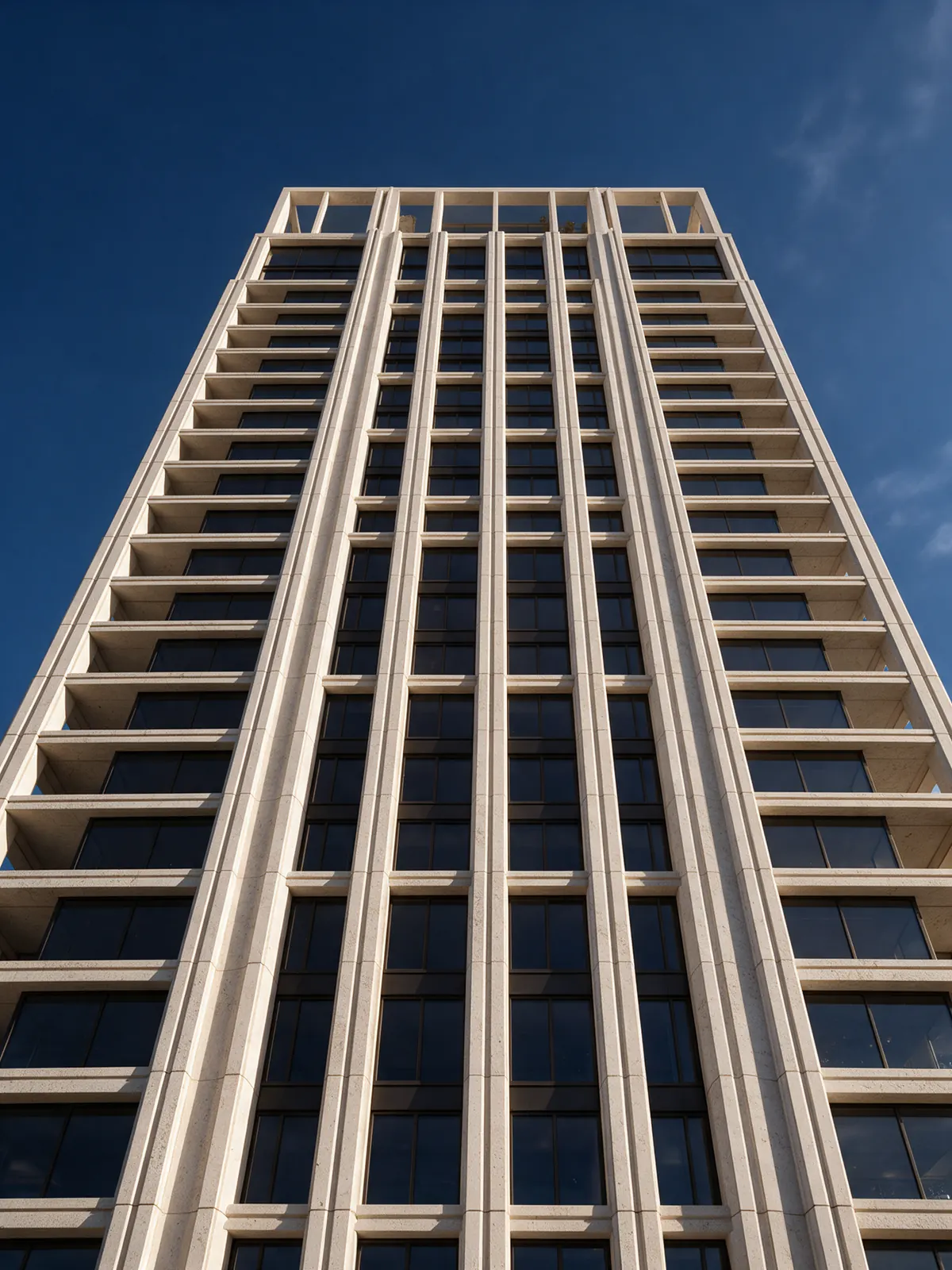
At sixty centimetres, the limestone fins keep direct sun off the glass for most of the day without darkening the interiors, and cut the cooling load by around a third compared with a flush glass facade.
The stone
The fins are cut from a pale limestone quarried two hours inland, chosen because it weathers lighter in salt air rather than darker. Each fin is three stacked pieces held with hidden steel pins, so a damaged section can be replaced without touching the glass.
Framing the view
The fins are spaced to match the rooms behind them. Stand in any living room and the sea fills a frame of stone on either side, the way a window does in an older house.
We drew the fins first and the floors second. Everything else in the building follows from the shade they make.
Cleaning and upkeep
A cleaning cradle runs on a track at the top of the building and drops between the fins, so the glass behind them can be cleaned without scaffolding.